Recently, I had a small but eye-opening moment that made me ask myself, what does it mean to be acquitted? I was chatting casually with a friend when this term suddenly came up in the conversation. At first, I felt completely lost. I remember thinking, “Am I missing something important here?” I didn’t want to reply incorrectly or sound confused, so I paused instead of guessing.
That curiosity pushed me to look into what does it mean to be acquitted and understand its real meaning and context. Once I did, everything started to make sense. I realized how common legal terms like this can appear in everyday conversations, social media, or even news headlines—and how easy it is to feel awkward if you don’t know what they mean.
After learning the proper definition, I felt much more confident responding. Now, whenever I see or hear what does it mean to be acquitted, I know exactly what it refers to and how to use it correctly. It reminded me that taking a moment to learn something new can save you from confusion and help you communicate with confidence.
Let’s dive in!
🧠 What Does “Acquitted” Mean in Text?
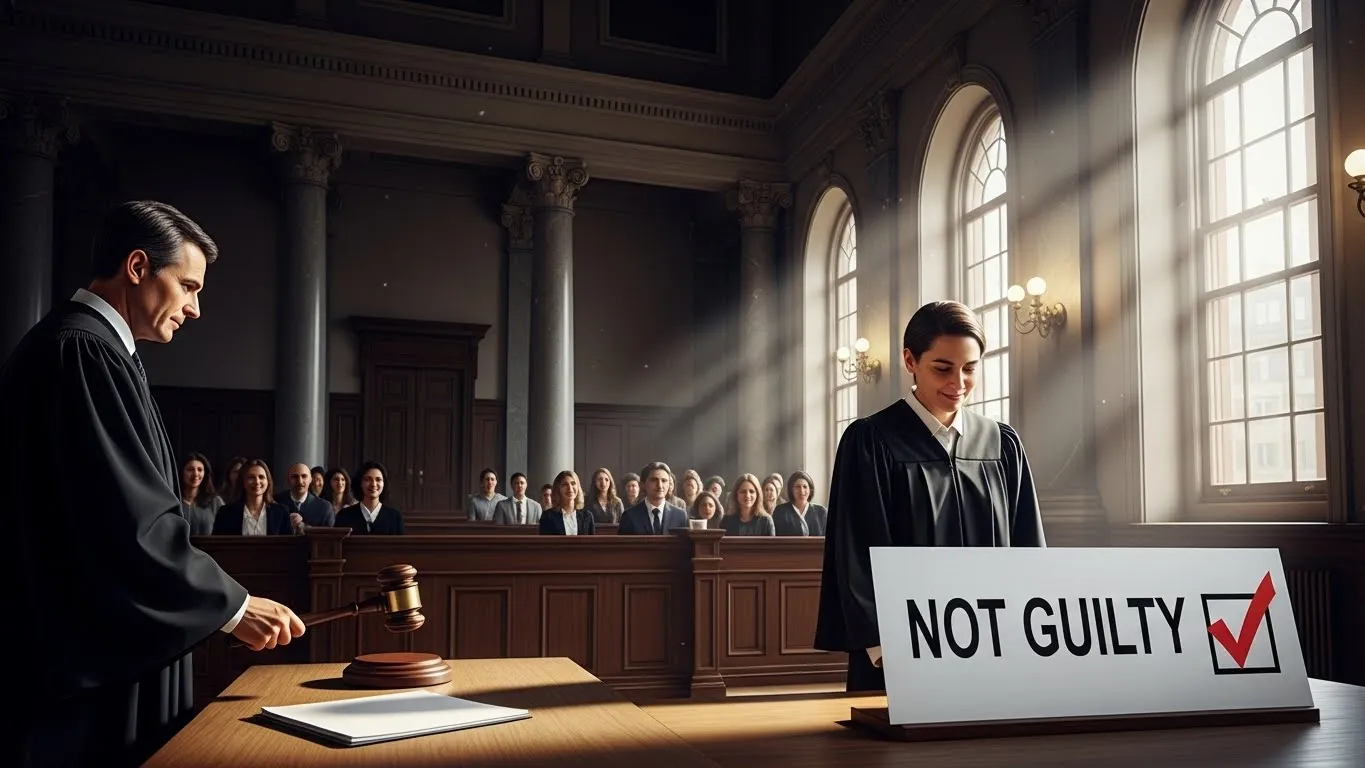
In legal terms, acquitted means that a person has been officially cleared of criminal charges in court. When someone is acquitted, it means the judge or jury determined that there wasn’t enough evidence to prove guilt beyond a reasonable doubt.
It does NOT mean the person is declared innocent — it simply means the prosecution did not prove the case.
Example sentence:
“After the trial, she was acquitted of all charges.”
In short: Acquitted = Not guilty verdict = Legally cleared of the charges.
📱 Where Is “Acquitted” Commonly Used?
While not slang, the word “acquitted” appears often on:
- 📺 News headlines
- 📱 Twitter/X and TikTok discussions
- 💬 Court case commentary
- 📰 Legal reports
- 📚 Law-related discussions
- 🔍 True-crime communities
Tone:
- It’s formal, serious, and legal.
- Not used casually in everyday texting unless you’re talking about a court case.
💬 Examples of “Acquitted” in Conversation
Here are realistic chat-style examples to show how people might use it:
1.
A: did u hear about the verdict?
B: yeah, he got acquitted 😳
2.
A: wait so that means he’s innocent??
B: not exactly, just not found guilty
3.
A: the charges were dropped?
B: nope, he was acquitted. trial finished.
4.
A: wow the jury acquitted her??
B: yup. not enough evidence.
5.
A: so can they charge him again?
B: usually no, cuz double jeopardy
6.
A: i’m confused… cleared or not?
B: legally cleared = acquitted
7.
A: i thought he did it tho
B: doesn’t matter, court acquitted him
🕓 When to Use and When Not to Use “Acquitted”
✅ When to Use
- When discussing court verdicts
- When explaining a legal outcome
- When responding to news stories
- When clarifying what happened in a trial
- When summarizing a verdict in a serious conversation
❌ When Not to Use
- Casual texts
- Work chats unrelated to law
- Flirty or friendly conversations
- As slang or shorthand
- In situations where “not guilty” is clearer to the reader
Comparison Table
| Context | Example Phrase | Why It Works |
| Friend Chat | “yeah he got acquitted today” | Informal explanation about a legal result |
| Legal Discussion | “The defendant was acquitted due to lack of evidence.” | Accurate and precise usage |
| Work Chat (Non-Legal) | “He was found not guilty.” | Clear and easier to understand |
| “The court ultimately delivered an acquittal.” | Formal, professional wording | |
| Social Media | “Breaking: The jury acquitted him of all charges.” | Fits news-style posting |
| Texting | “He was cleared of the charges.” | More casual and reader-friendly |
🔄 Similar Words or Alternatives
| Word / Phrase | Meaning | When to Use |
| Not guilty | Court says the person didn’t legally commit the crime | Everyday explanation, casual chats |
| Cleared of charges | No conviction; charges didn’t result in guilt | Social media or news comments |
| Case dismissed | Judge throws out the case before verdict | When charges are dropped early |
| Exonerated | Officially proven innocent after conviction | Documentaries, serious contexts |
| Charges dropped | Prosecutors stop pursuing the case | Before trial begins |
| Verdict delivered | The court has reached a decision | News-style posts or formal writing |
❓ FAQs About “Acquitted”
1. Does “acquitted” mean innocent?
Not exactly. It means the court decided there wasn’t enough evidence to prove guilt. It does not mean the person is declared innocent.
2. Can someone be retried after being acquitted?
Usually no — that’s protected by double jeopardy, which prevents trying someone twice for the same crime (with some exceptions depending on jurisdiction).
3. Is “acquitted” the same as “charges dropped”?
No. Charges dropped happens before trial; acquitted happens after a full trial concludes.
4. Can civil cases use the word “acquitted”?
Not typically. Acquittal applies to criminal cases. Civil cases use terms like “liable” or “not liable.”
5. Is “acquitted” a casual word?
No. It’s formal and usually appears in legal or news contexts.
6. What’s the opposite of acquitted?
“Convicted,” meaning found guilty.
7. Why do people on social media use the word so much?
Because it often appears in trending news, celebrity cases, and high-profile trials — making the word widely circulated.